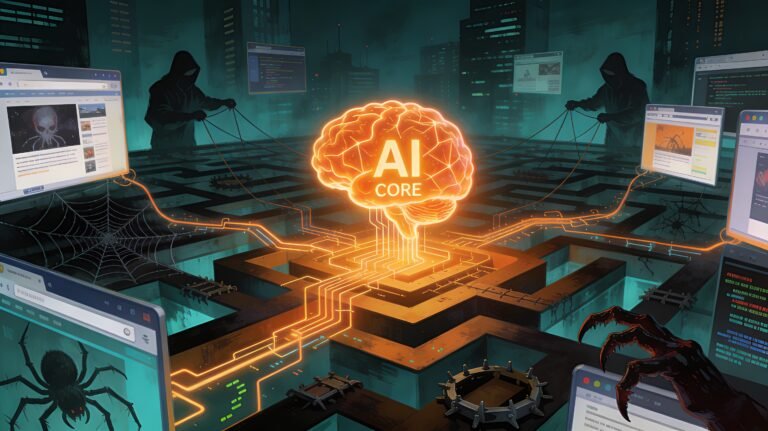

When GitHub Gets Breached, The Entire Tech Industry Pays Attention
For most people outside the technology world, GitHub is probably just another website name floating around the internet. For developers, cybersecurity professionals, system administrators, and software companies, GitHub is part of the backbone of modern software development.
Apps, websites, business systems, automation tools, AI platforms, and even government infrastructure often rely on code stored or managed through GitHub in some way. That is why the recent GitHub breach immediately sent shockwaves through the cybersecurity and developer communities worldwide.
GitHub recently confirmed unauthorized access to roughly 3,800 internal repositories after attackers compromised an employee device through a poisoned Visual Studio Code extension. According to GitHub’s investigation so far, the breach appears limited to GitHub’s own internal repositories, with no current evidence showing customer repositories or external customer data were impacted.
At first glance, people outside the tech world may read this and think, “Okay, so some code got stolen.” In reality, the situation is much bigger than that.
This incident highlights one of the fastest-growing threats in cybersecurity today: software supply-chain attacks.
What Actually Happened?
Based on reports released so far, attackers linked to a threat group called TeamPCP allegedly gained access after a GitHub employee unknowingly installed a malicious Visual Studio Code extension.
Visual Studio Code, commonly called VS Code, is one of the most popular code editors in the world. Developers use extensions inside VS Code every day to improve workflow, add features, speed up development, and customize their environments.
The problem is simple.
Developers trust these tools.
Attackers know that.
If a malicious extension successfully disguises itself as a legitimate productivity tool, attackers may gain access to everything the developer has access to. In many cases, that includes source code, authentication tokens, cloud credentials, SSH keys, deployment pipelines, and internal systems. Security researchers noted that VS Code extensions can potentially access sensitive developer workstation data, making them an increasingly attractive target for threat actors.
Think of it like this.
Instead of trying to break through the front door of a heavily guarded building, attackers compromise a trusted maintenance worker who already has a badge to get inside.
That is the modern cybersecurity battlefield.
The Rise of Supply-Chain Attacks
Years ago, most cyberattacks focused directly on websites, passwords, or servers. Today, attackers increasingly target third-party tools, plugins, packages, extensions, and software dependencies.
Why?
Because modern development environments are built on trust.
A single application may depend on hundreds or even thousands of external packages, frameworks, integrations, APIs, and plugins. Developers often install tools from public marketplaces daily without thinking twice because workflow speed is critical in modern development.
Threat actors understand this ecosystem extremely well.
According to researchers following TeamPCP activity, the group has reportedly been connected to multiple recent supply-chain attacks involving developer tooling, package ecosystems, and compromised software pipelines throughout 2026.
This is why many cybersecurity professionals were not necessarily shocked by the GitHub breach itself. What caught attention was the scale, the target, and what it represents moving forward.
If attackers can successfully infiltrate one of the largest software development platforms on Earth through a poisoned extension, every organization should pay attention.
Why This Matters Beyond Developers
Some people hear “internal repositories” and assume regular users are unaffected. That is not always the case.
Internal repositories often contain infrastructure logic, deployment workflows, automation scripts, architecture details, internal tooling, and security processes. Even if customer data was not directly exposed, architectural knowledge alone can help attackers better understand systems and potentially plan future attacks.
This is why breaches like this matter far beyond just developers.
Schools, hospitals, businesses, tribal organizations, financial institutions, and government agencies all rely on software ecosystems built using tools like GitHub, VS Code, npm packages, APIs, and third-party integrations.
When trust inside the software supply chain becomes compromised, the ripple effects can spread quickly.
The Human Side of Cybersecurity
One thing many people outside the cybersecurity world misunderstand is that breaches are rarely caused by “stupid people.”
Most modern attacks succeed because attackers exploit trust, routine behavior, fatigue, or complexity.
Developers install extensions every day.
Employees click software updates every day.
Administrators connect integrations every day.
Modern cybersecurity is not simply about having antivirus software anymore. Security today is about visibility, layered defenses, monitoring, least-privilege access, segmentation, employee awareness, and rapid incident response.
GitHub appears to have responded quickly by isolating the compromised device, removing the malicious extension, rotating sensitive credentials, and launching a larger investigation.
That quick response likely prevented the situation from becoming significantly worse.
Still, the breach serves as another reminder that even the most trusted technology companies in the world remain targets.
My Perspective as a Developer and Security Professional
As someone who works in both web development and cybersecurity, incidents like this stand out because they reinforce something security professionals have been saying for years:
Convenience and trust are now major attack surfaces.
Every plugin, extension, integration, AI tool, package manager, or automation script introduces another layer of risk into an environment. Most organizations focus heavily on securing servers and passwords while overlooking the developer workstations and third-party tooling developers use daily.
That blind spot is becoming one of the most exploited areas in modern cybersecurity.
This is also why documentation, proper security policies, endpoint monitoring, software auditing, and update management matter so much. Security is no longer one product or one firewall. It is an entire operational mindset.
Final Thoughts
The GitHub breach is not just another cybersecurity headline.
It is a real-world example of how modern cyberattacks are evolving. Attackers are becoming more patient, more strategic, and more focused on trusted ecosystems rather than brute-force attacks.
For developers, this incident is a wake-up call to audit extensions, review permissions, rotate secrets regularly, and pay closer attention to the tools installed inside development environments.
For businesses and organizations, it is a reminder that cybersecurity is now directly tied to operational stability.
And for everyday users, it shows how deeply interconnected modern technology has become. A single malicious extension installed on one employee device was enough to expose thousands of repositories inside one of the most trusted development platforms in the world.
That is the reality of cybersecurity in 2026.